How I Finally Got Organized

David
Author
How I Finally Got Organized: Building Custom Pipelines for Every Deal Type
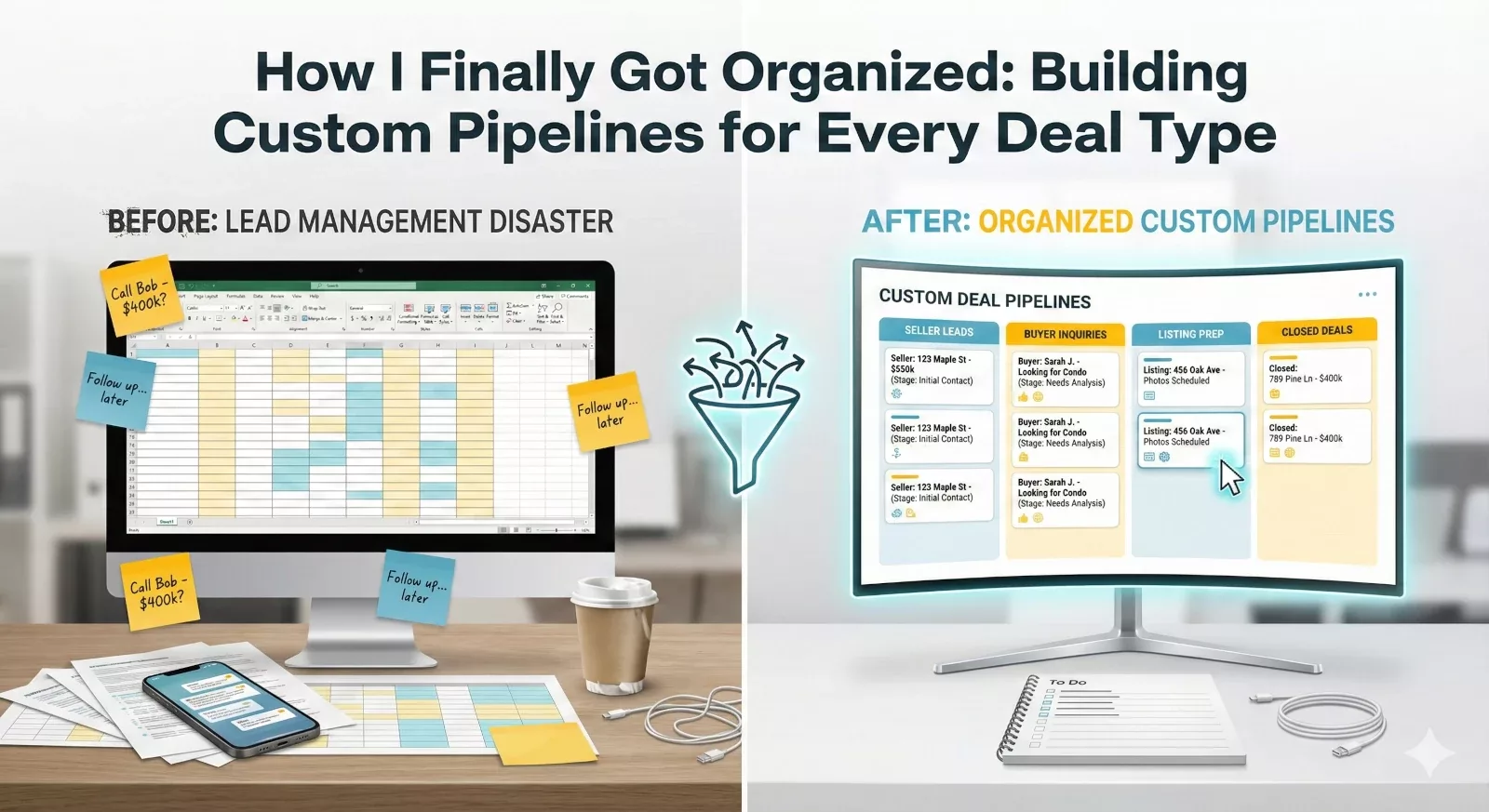
I'll be the first to admit it. For the longest time my lead management system was a disaster. Sticky notes on my monitor. Random spreadsheets that hadn't been updated in weeks. Text messages buried somewhere in my phone that I swore I'd follow up on "tomorrow." Sound familiar?
The turning point came when I lost a $400,000 listing because I mixed up my seller leads with buyer inquiries and completely dropped the ball on a follow-up call. That was the wake up call I needed. I realized that treating every lead the same way and dumping them all into one giant bucket was costing me real money.
The solution? Custom pipelines for every deal type I handle. And honestly it changed everything about how I run my business.
Why One Pipeline Doesn't Work in Real Estate
Here's the thing about real estate. A buyer looking for their first home has completely different needs than an investor hunting for rental properties. A seller preparing to list their family home requires a totally different approach than a landlord trying to fill a vacant unit.
When I tried cramming all these deal types into a single pipeline, leads constantly fell through the cracks. I'd have a motivated seller sitting in a stage called "Property Search" which made zero sense.
According to the National Association of REALTORS 2024 Technology Survey, CRMs ranked among the top three tech tools that gave agents their highest-quality leads. But a CRM is only as effective as the pipeline stages you set up inside it. Use the wrong stages and the tool actually becomes counterproductive.
Setting Up Your Buyer Pipeline
Let me walk you through how I structured my buyer pipeline. The key is mapping out the actual journey your buyers take from first contact to closing day.
New Lead: Someone filled out a form, called from a sign, or got referred. Make contact as quickly as possible.
Initial Consultation: We've had our first real conversation. I know their budget, timeline, and preferences.
Pre-Approved: They've talked to a lender and have financing lined up. Now I know they're serious.
Active Search/Touring: We're out looking at homes, scheduling showings, and gathering feedback.
Offer Submitted: We found the one and put in an offer.
Under Contract: Offer accepted. We're handling inspections, appraisals, and paperwork.
Closing: Papers signed, keys handed over.
Each stage triggers different automations. When someone moves to "Pre-Approved" they automatically get added to a property alert drip campaign. When they hit "Under Contract" my transaction coordinator gets notified.
Building Your Seller Pipeline
Sellers require a completely different approach. Their journey isn't about finding the right property but rather about preparing their property to sell.
New Lead: A potential seller has reached out or I've identified them as a prospect.
Listing Consultation Scheduled: We've booked a time to meet and discuss their property.
CMA Presented: I've created a comparative market analysis and presented my recommended list price.
Listing Agreement Signed: They've committed to working with me.
Pre-Market Preparation: Coordinating staging, photography, repairs, and getting show-ready.
Active Listing: The property is live on MLS.
Offer Received: Someone wants to buy. Time to negotiate.
Under Contract: Working through contingencies.
Closed: Deal done, time to ask for referrals.
Having this separate from my buyer pipeline means I can see at a glance how many active listings I have versus buyers I'm working with. It helps me balance my business and know where to focus prospecting efforts.
Creating an Investor Pipeline
Working with investors taught me that their needs are wildly different from traditional buyers. They care about numbers, not emotional connections. They move faster and often want to see multiple deals simultaneously.
New Investor Contact: Initial outreach or referral.
Investment Criteria Defined: I understand their buy box, cash flow requirements, and return expectations.
Deal Analysis: I'm running numbers on potential properties matching their criteria.
Property Under Consideration: They're interested in a specific deal.
Offer Submitted: We've made a move.
Due Diligence: Inspections, rent rolls verification, expense analysis.
Closed/Acquired: They own the property.
Portfolio Management: This is unique to investors. I keep them in my system for future deals and check in quarterly about appetite for more acquisitions.
The Rental Pipeline Most Agents Forget
If you work with any rental properties you need a separate pipeline for this. Mixing rental leads with purchase leads is a recipe for confusion.
Rental Inquiry: Someone is looking for a place to rent.
Requirements Gathered: Budget, move-in timeline, pet situation, preferred locations.
Showing Scheduled: We're touring available units.
Application Submitted: They found a place and applied.
Application Approved: Background check and income verification completed.
Lease Signed: Paperwork done.
Move-In Completed: Keys handed over, deposit collected.
Making Your Pipelines Work Together
The magic happens when your pipelines start talking to each other. That buyer who just closed? They move to a "Past Client" nurture sequence where I stay in touch and eventually they might become a seller lead entering my seller pipeline. That investor who bought a rental property might need a tenant, which connects to my rental pipeline.
A good CRM lets you see all of these relationships and track where each contact is in their journey with you. You're not starting from scratch every time because you have history and context for every conversation.
Getting Started With Custom Pipelines
If you're still managing leads with spreadsheets or a basic contact list, I get it. The idea of setting up multiple pipelines feels overwhelming. But here's my advice: start with one.
Pick the deal type you handle most often. Build out those stages first. Get comfortable moving leads through that pipeline and setting up basic automations. Then add another pipeline for your second most common deal type.
Territory Titan makes this process straightforward with custom pipeline features that let you create exactly the stages that match your workflow. You're not forced into someone else's idea of how real estate deals should progress. You build what actually works for your business.
The investment in getting organized pays dividends immediately. You'll stop losing leads. You'll know exactly what your next action should be with every contact. And you'll finally have clarity on where your business actually stands instead of just hoping you're staying on top of things.
Trust me, your future self will thank you for taking the time to build this out. I know mine does every single day.