Why Investor Leads Deserve Their Own Pipeline

David
Author
I learned this lesson the hard way about three years ago when I had a promising investor lead slip through the cracks. Jim was looking for rental properties in our market, and I treated him exactly like any other buyer lead. After two months of showing him single-family homes with the same approach I used for homebuyers, he stopped responding to my calls.
Turns out, Jim had been waiting for me to show him cap rate calculations and rental comps - information that never crossed my mind to prepare because I was stuck in my traditional buyer mindset. That missed opportunity taught me something crucial: investor clients aren't just different buyers, they're an entirely different species of client that requires a completely different approach.
The Investor Mindset: Numbers Over Emotions
While traditional homebuyers get excited about granite countertops and open floor plans, investors are running calculations in their heads. They want to know about cash flow potential, neighborhood rental rates, and projected appreciation. They're analyzing deals, not falling in love with homes.
This fundamental difference means your standard Real Estate CRM pipeline - designed around emotional decision-making and quick closings - completely misses the mark with investors. You need a system that tracks different data points, follows longer nurture cycles, and acknowledges that investors often evaluate dozens of properties before making an offer.
Recent industry data shows that investor transactions typically take 40% longer to close than traditional buyer transactions, yet most agents try to push investors through the same 30-60 day pipeline they use for homebuyers. No wonder so many investor leads go cold.
What Makes Investor Leads Different
After working with investor clients for the past few years, I've identified several key differences that demand a separate pipeline approach:
Timeline Expectations: Investors rarely feel urgency the way homebuyers do. They're typically building portfolios over months or years, not trying to move in before the school year starts. Your pipeline stages need to accommodate this extended timeline.
Data Requirements: While homebuyers care about school districts and commute times, investors need rental comps, cap rates, cash-on-cash returns, and rehab estimates. Your CRM needs custom fields to track this investment-specific information.
Decision Process: Most homebuyers make emotional decisions and justify them with logic afterward. Investors flip this completely - they make logical decisions based on numbers and only move forward when the math works.
Volume Approach: A typical homebuyer might look at 5-10 properties before buying. Investors often analyze 50-100 potential deals before finding one that meets their criteria. Your pipeline needs to handle this volume without getting cluttered.
Building Your Investor Pipeline: Stage by Stage
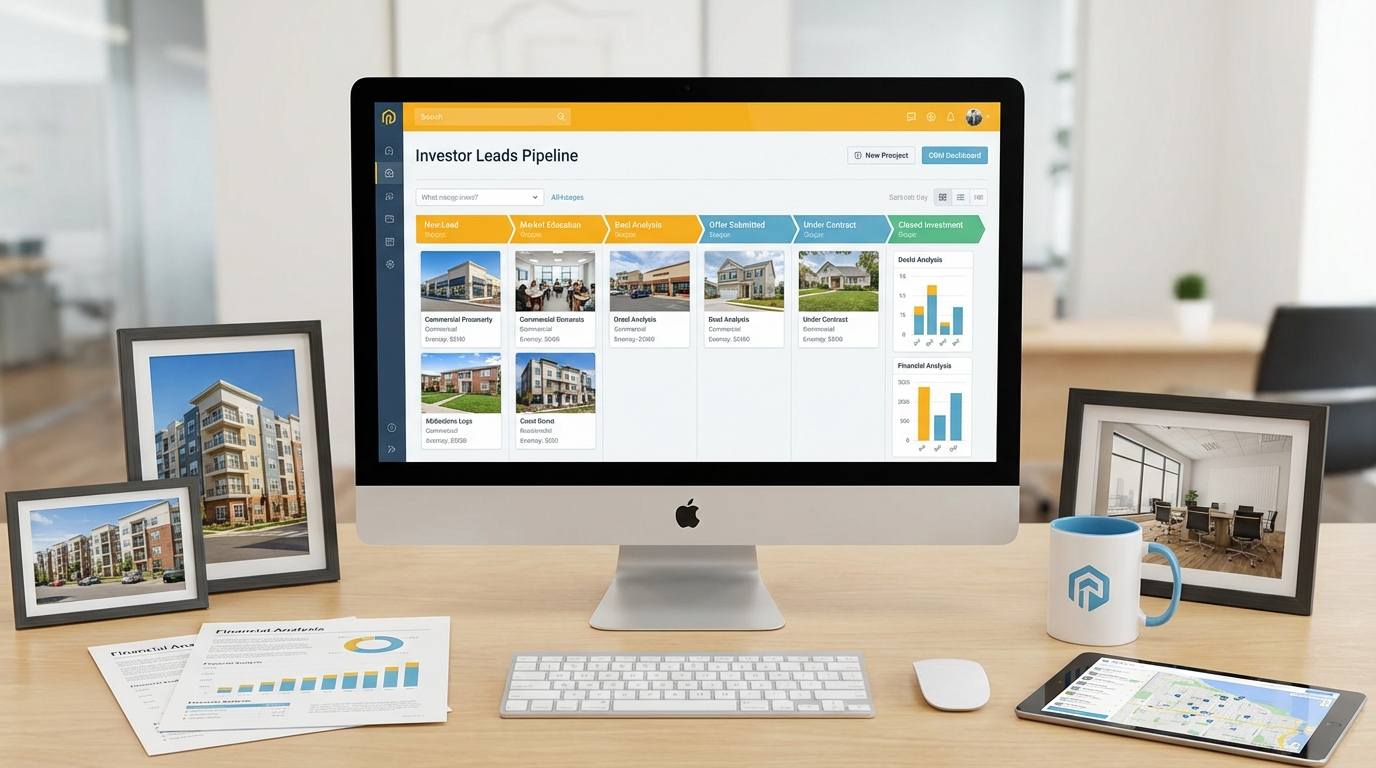
Here's how I structure my investor pipeline, which has improved my conversion rate with investment clients by over 60%:
Stage 1: Initial Qualification
This isn't about pre-approval like traditional buyers. I'm qualifying their investment criteria, budget range, preferred property types, and timeline. I also determine whether they're fix-and-flip investors, buy-and-hold investors, or commercial property buyers - each requires different approaches.
Stage 2: Market Education
Most investors need education about local market conditions, rental rates, and neighborhood dynamics. I spend significant time in this stage providing market reports, rental analysis, and investment property performance data.
Stage 3: Deal Analysis
This is where I present potential properties with complete investment analysis: cap rates, cash flow projections, comparable rental rates, and estimated repair costs. Multiple properties often live in this stage simultaneously.
Stage 4: Due Diligence
Investors do extensive due diligence before making offers. This stage tracks inspection periods, rental potential verification, financing arrangements, and partnership consultations that investors often require.
Stage 5: Negotiation & Closing
Investor negotiations focus on different points than homebuyer negotiations. They care more about closing timelines, inspection periods, and terms that affect their return on investment.
Custom Fields That Matter for Investors
Your AI Powered CRM needs to track different data points for investor leads. Here are the custom fields I've found essential:
- Investment Strategy (fix-and-flip, buy-and-hold, commercial, etc.)
- Target Cap Rate or Cash-on-Cash Return
- Maximum Purchase Price Range
- Preferred Property Types and Locations
- Financing Method (cash, conventional, hard money)
- Portfolio Size and Experience Level
- Timeline for Next Purchase
- Properties Currently Under Analysis
These fields help me quickly understand where each investor stands and what type of opportunities to bring them.
Automated Nurture Sequences for Investors
Traditional buyer nurture sequences focus on market updates and new listings. Investor nurture sequences need different content:
Monthly Market Investment Reports: I send automated reports showing rental rate trends, cap rate changes, and investment property performance in their target areas.
Deal Alert System: When properties matching their investment criteria hit the market, my system automatically sends alerts with preliminary investment analysis.
Educational Content Series: Automated sequences that provide ongoing education about real estate investment strategies, tax implications, and market opportunities.
Portfolio Check-ins: Quarterly automated follow-ups to discuss portfolio performance and identify expansion opportunities.
The Technology That Makes It Possible
Managing separate pipelines used to mean juggling multiple spreadsheets and reminder systems. Modern Real Estate Productivity tools have changed everything. A robust CRM with custom pipeline capabilities lets you create completely different workflows for different client types.
The key is finding a system that allows unlimited customization without becoming overly complex. You need the ability to create custom fields, automated sequences, and reporting that makes sense for each client type you serve.
I've seen agents increase their investor client satisfaction dramatically just by implementing proper pipeline segmentation. When investors feel like you understand their business and speak their language, they become incredibly loyal clients who refer other investors.
Making the Switch
If you're currently managing investor leads in a general pipeline, making the switch might seem daunting. Start by identifying your current investor leads and moving them to a dedicated pipeline. You'll immediately see which ones have been stuck in inappropriate stages.
The investment in time to set up proper investor pipeline management pays dividends quickly. Investors who feel understood and properly served become long-term clients who bring repeat business and referrals.
Don't make the same mistake I made with Jim. Investor leads deserve their own pipeline because they operate in a completely different world from traditional buyers and sellers. Give them the specialized attention they need, and watch your investor business transform.
Ready to create custom pipelines that actually match how your different client types operate? Territory Titan's custom pipeline features make it simple to set up dedicated workflows for investors, buyers, sellers, or any other client segment. Stop forcing square pegs into round holes and start managing your leads the way they deserve to be managed.